
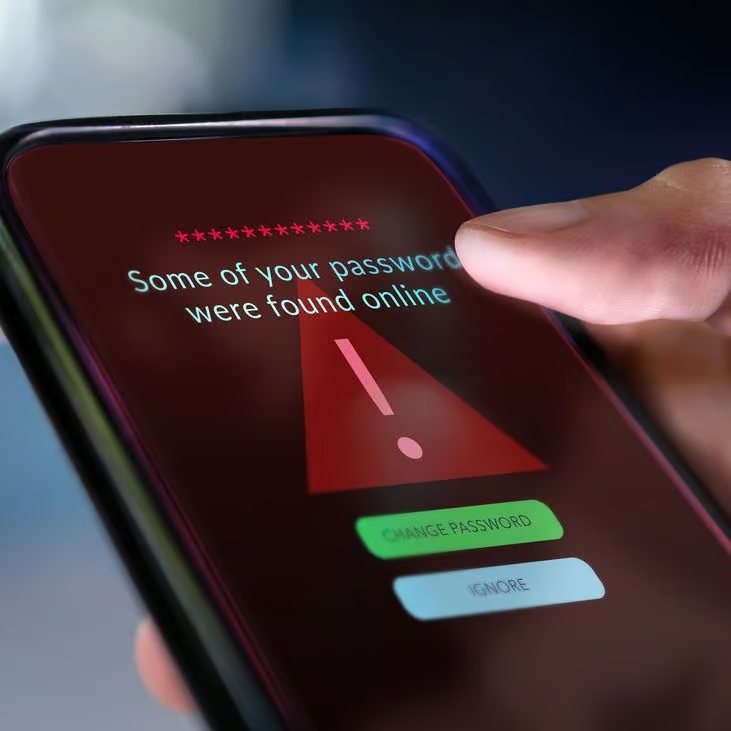
Dark Web Monitoring
Leaked credentials can circulate before an organisation realises it’s exposed. That creates a pathway for account takeover, often without obvious warning. In healthcare, a single compromised mailbox can quickly become wider disruption as attackers access files, impersonate staff or trigger payment fraud.
Rend provides dark web monitoring for Australian healthcare practices to detect exposed credentials early and trigger fast remediation. Monitoring works best when it feeds into clear response steps and stronger identity controls, so alerts become action, not noise.
Get in touchRend provides dark web monitoring for Australian healthcare practices to detect exposed credentials early and trigger fast remediation. Monitoring works best when it feeds into clear response steps and stronger identity controls, so alerts become action, not noise.
Services
Explore our comprehensive service offerings
Cyber Risk Assessments
Healthcare Cybersecurity Services
Microsoft 365 Email and Outlook Support for Healthcare
Microsoft 365 for Healthcare
After‑hours support that prioritises clinical impact, fast triage, escalation and restoration.
Get in touch

Why Rend
Rend provides dark web monitoring to detect exposed credentials early and reduce account takeover risk. When exposure is found, we help clinics respond quickly with remediation steps like resets, access reviews and stronger sign-in controls. It is an early-warning layer that strengthens your overall security program.
Dedicated Support
Security & Control
End-to-end Service
Compliance
Credential exposure response that moves quickly
When a credential exposure alert appears, speed matters. Rend helps clinics respond fast by verifying the alert, confirming what accounts may be affected, and guiding the immediate containment steps.
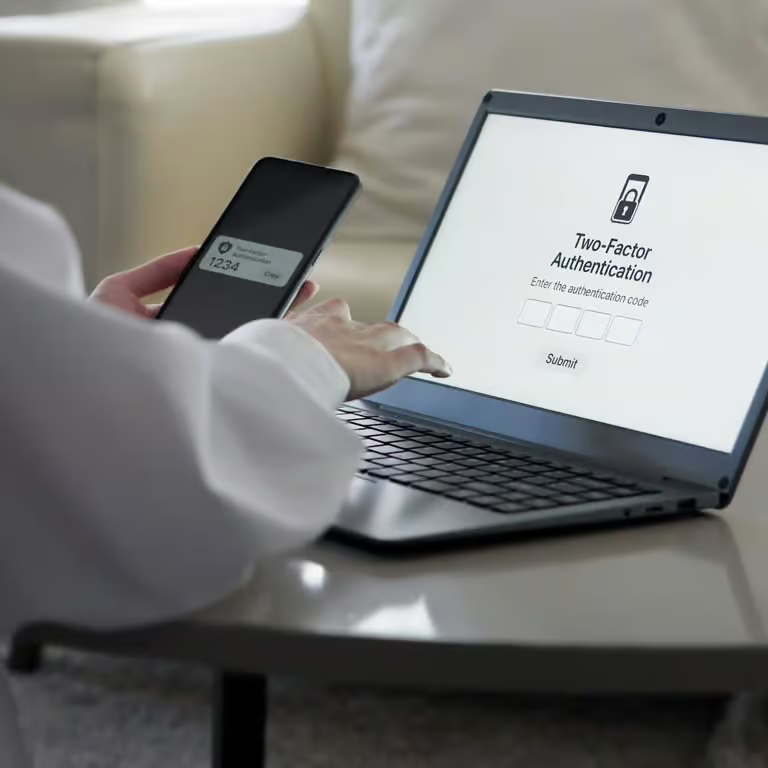
This can include credential resets, MFA enforcement, access reviews, and checks for suspicious sign-in activity. The goal is to reduce the chance that a leaked password turns into account takeover, broader system access, or disruption to clinic operations.
Beyond the immediate response, we also recommend practical control improvements to reduce repeat exposure and strengthen day-to-day identity security.
If you want clear guidance on what to do when an alert hits, Rend can help with a fast, practical response pathway.
This can include credential resets, MFA enforcement, access reviews, and checks for suspicious sign-in activity. The goal is to reduce the chance that a leaked password turns into account takeover, broader system access, or disruption to clinic operations.
Beyond the immediate response, we also recommend practical control improvements to reduce repeat exposure and strengthen day-to-day identity security.
If you want clear guidance on what to do when an alert hits, Rend can help with a fast, practical response pathway.
Achieve IT operational excellence with Rend
If you want to improve reliability, reduce downtime, or get clear advice on next steps, contact Rend for a quick consult.
Get Started
Dark web monitoring as an early warning layer
Dark web monitoring gives clinics an early warning when credentials linked to the organisation appear in breach data or underground sources. On its own, an alert does not reduce risk. The value comes from having a clear remediation process and stronger identity controls behind it.
Rend helps healthcare organisations turn alerts into a repeatable security process, including verification, escalation, credential hygiene, access reviews, and authentication hardening. This supports faster containment and improves resilience over time.
The result is a stronger security posture, with dark web monitoring functioning as a practical part of a broader cybersecurity program rather than a standalone to
Rend helps healthcare organisations turn alerts into a repeatable security process, including verification, escalation, credential hygiene, access reviews, and authentication hardening. This supports faster containment and improves resilience over time.
The result is a stronger security posture, with dark web monitoring functioning as a practical part of a broader cybersecurity program rather than a standalone to


Testimonials
"Rend transformed our healthcare clinic's IT infrastructure completely. Their team understood our unique challenges and delivered solutions that exceeded our expectations. Patient data security and system uptime have never been better."

Lloyd Adams
Head of Growth - Genea Fertility
Rend Tech has supported Walker Street Doctors for many years. They were enormously helpful in setting up our systems in a way that were user friendly for our practice including remote access.
The systems that Rend Tech had in place protected us from a potential data breach in 2020, and saved the reputation of our practice from going the way of Optus or Medibank. They run online programs for GP owners and managers in cybersecurity. They helped guide us in our cybersecurity policy that we ask our staff to review annually.
Rend Tech recently helped us with our move to new premises. The move was seamless and expertly carried out with the bare minimum of business hours lost. Rend Tech are worth their weight in gold !.

Dr. Nerida McDonald
Principal GP & Founder
"Rend made our transition from Medical Director to Best Practice seamless and stress-free. Our systems were slow and holding us back, but their team not only uplifted our entire IT environment, they managed every aspect of the migration with precision. From conducting multiple trial conversions to working closely with our leadership team, Best Practice, and our third-party software vendors, everything was meticulously planned. The final migration was completed over the weekend, meaning we experienced zero downtime and were fully operational from day one. It truly felt like business as usual for our clinicians and staff, and we couldn’t be happier with the outcome."

Dr. Susan Culhane
Principal GP & Practice Partner
“REND Tech delivered a seamless IT rollout for The Paediatrics Practice, ensuring our systems were fully operational from day one. From network and cloud infrastructure to clinical application setup and security, everything was implemented with precision and aligned to our workflows. Our go-live was truly ‘business as usual’— with zero downtime, no data issues, and immediate access for all users. The planning, coordination with vendors, and attention to detail meant we could focus entirely on patient care from the moment we opened our doors.”

Dr Joe Meredith
Principal Specialist
Frequently asked questions
Find answers to your questions about our Dark Web Monitoring Services
Still have questions?
We're here to help you!
Does monitoring prevent breaches?
It reduces risk by surfacing exposures early so you can act fast.
Why is dark web monitoring important for healthcare providers?
Healthcare providers rely on secure access to clinical systems, email, and patient information every day. If staff credentials are exposed, it can increase the risk of account takeover, phishing attacks, and unauthorised access. Dark web monitoring for healthcare provides an early warning so clinics can respond faster and reduce the chance of a larger security incident.
What happens when dark web monitoring finds exposed clinic credentials?
When dark web monitoring for healthcare identifies exposed credentials, the next steps usually include verifying the alert, identifying affected accounts, resetting passwords, enforcing or reviewing MFA, checking for suspicious sign-in activity, and reviewing access permissions. A fast response helps contain risk and reduces the chance of repeat exposure.
Is dark web monitoring for healthcare enough on its own?
No. Dark web monitoring for healthcare is most effective when it is part of a broader medical practice cybersecurity strategy. It should sit alongside strong password practices, MFA, access controls, staff training, endpoint protection, and incident response processes. The alert is valuable, but the remediation process is what reduces risk.
Which healthcare organisations should use dark web monitoring?
Dark web monitoring for healthcare can benefit GP clinics, specialist practices, allied health providers, day surgeries, and multi-site healthcare organisations. Any provider that uses email, cloud platforms, clinical software, or remote access can benefit from early detection of credential exposure and faster containment of identity-related threats.